 Skip to content


Industrial buyers in South Africa rarely pick up the phone first. An engineer checks your specifications on site, procurement checks whether you are a compliant supplier, and a director wants to know what the project will cost and what could go wrong. By the time someone enquires, most of the decision has already been made on your website, or on a competitor’s.
Good industrial website design is built around that reality. It maps how industrial and commercial buyers actually research, gives each person on the buying team the evidence they need, and works properly on the phone in a plant, yard or site office. This guide shows you how to do that, step by step.

Key takeaways
| Question | Short answer |
|---|---|
| When do buyers contact you? | Late. Research shows most B2B buyers already have requirements and a favourite supplier before first contact. |
| Who is the website for? | A buying team: engineers, procurement, operations and decision-makers, each with different questions. |
| What should the structure be? | Solution pages as entry points, each linked to its specs, projects, FAQs and a relevant next step. |
| Does mobile really matter for B2B? | Yes. About 77% of web traffic in South Africa is on mobile, and field staff research on their phones. |
| Where do you start? | Audit the site against buyer friction first, then fix what blocks essential information. |
How do industrial buyers research before they contact you?
Mostly on their own. In 6sense’s 2024 Buyer Experience Report, reported by Demand Gen Report, B2B buyers were nearly 70% of the way through their purchase before engaging a seller, and buyers made the first contact 80% of the time.
For an industrial or commercial supplier, the practical meaning is simple. If your website cannot answer the questions an engineer or procurement officer asks during that silent research phase, you are not on the shortlist when they finally pick up the phone.
Industrial website design starts with the buyer journey
Industrial purchases rarely move neatly from first visit to enquiry. A technical approver may check specifications before the budget is set, and someone else may return months later to check service coverage or lead times. Use stages to plan content, not as gates buyers must pass through.
| Stage | Buyer question | What the website must provide |
|---|---|---|
| Problem | What is causing this, and what are our options? | Plain-language explanations of the problem, approaches and outcomes |
| Fit | Will this work with our equipment, site and standards? | Specifications, compatibility, certifications and implementation details |
| Justify | Can we defend this choice internally? | Project examples, client names, compliance documents and indicative pricing |
| Engage | Who do we speak to, and how fast will they respond? | A clear quote route, phone and WhatsApp, and response times |
| Support | How do we maintain it and get help? | Service areas, spares, manuals and support contacts |
Industrial buyers tend to weigh technical fit, integration and downtime risk. Commercial buyers, such as facilities and property managers, lean more on service levels, coverage and turnaround. One generic journey hides those differences, so plan both if you serve both.
Who is on an industrial buying team, and what does each person need?
According to the same 6sense research, the average B2B buying group is 11 people. In a South African industrial purchase, the roles usually look like this:

| Role | Main concern | Evidence they look for |
|---|---|---|
| Engineer or technical approver | Will it work and comply? | Specs, drawings, standards (such as SANS or ISO), compatibility |
| Procurement | Is this a safe, compliant supplier? | Company registration, B-BBEE status, tax compliance, lead times, delivery areas |
| Operations or end user | What changes day to day? | Training, maintenance, support and downtime |
| Director or decision-maker | Is it worth it, and what is the risk? | Outcomes, costs, references and track record |
Build the map from real conversations, not assumptions. Ask a few recent customers what triggered the purchase, what options they compared, what information was hard to find and what nearly stopped them. Then check those answers against your site search terms, page paths and the questions in your enquiry forms. We go deeper into designing for each role in our guide to B2B website design and UX.
Turn buyer questions into an industrial website structure
The most common mistake in industrial website design is the orphaned PDF: specifications, brochures and certificates dumped in a downloads page with no context. Buyers should not have to assemble an answer from scattered files.
Use this structure instead:
- Solution or service pages as entry points. One page per product line or service, written around the problem it solves.
- Linked evidence on every solution page. Specs, project examples, FAQs and compliance documents sit on or link directly from the page they support.
- One source of truth for shared details. Keep specs and service information in one place and link to it, so versions do not drift apart.
- Industry or role pathways only where needs genuinely differ. A mining client and a property manager may need different routes. Do not build them if they would say the same thing.
- A next step that matches the page. A technical page invites a technical question. A pricing or project page invites a quote request.
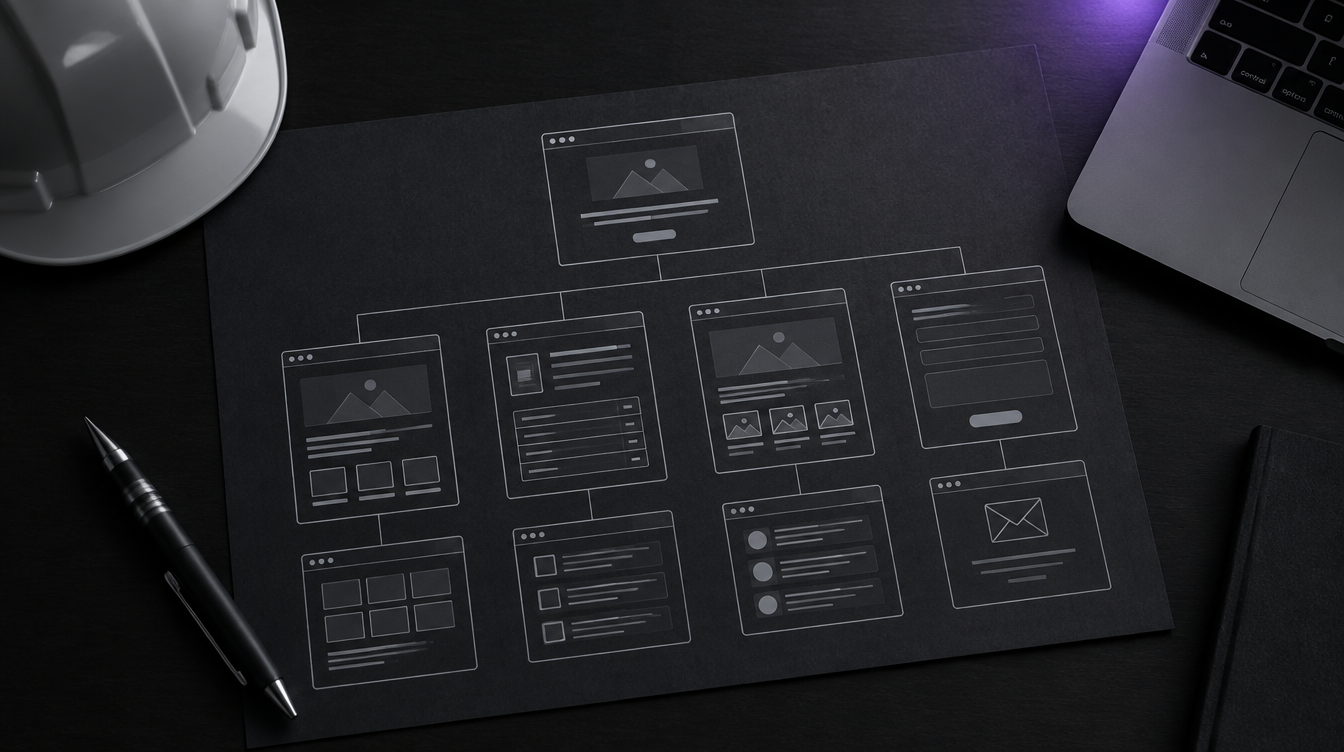
This is why every SynthX website design project starts with a written scope agreed before work begins. Structure should solve a real buyer problem, not add pages for the sake of it. You can see sites we have built for industrial and trade businesses, from truck and trailer to coatings and energy, in our work.
Why mobile-first industrial website design matters in South Africa
B2B research still happens at desks, but a lot of it does not. A foreman checks a part number in the yard. A fleet manager looks up your branch number between sites. A facilities manager pulls up your service areas on a rooftop. If your site only works on a widescreen monitor, it fails at exactly the moment someone is ready to act.

- Put the essentials within thumb reach: click-to-call, WhatsApp, branch locations and the quote button.
- Make specifications readable on a phone: short summaries, descriptive headings and tables that scroll sideways instead of breaking.
- Keep pages light: compress images and avoid heavy sliders. Not every visitor is on fibre, and data still costs money.
- Use tap-friendly controls and readable type: gloves, glare and small screens are real conditions on site.
This is the standard every SynthX build starts from: designed for the phone first, then scaled up to desktop. See how it applies locally on our website design Johannesburg page.
Give buyers a self-serve route and a sales route
An early researcher wants information without a sales call. A buyer who has finished technical checks wants a quote today. Your website should serve both without forcing everyone into the same funnel.
- Keep selection information ungated. Buyers should be able to assess basic fit without handing over their details.
- Make each call to action specific. “Ask an engineer about compatibility” converts better on a spec page than a generic “Contact us”.
- Keep enquiry forms short. Name, company, contact details, the product or service, and an optional message are usually enough.
- Send context with each enquiry. Record which page or product the enquiry came from, so your sales team starts with the buyer’s actual question.
- State your response time. “A person replies within one business day” builds more trust than silence.
Audit your industrial website against buyer friction
A useful audit of your industrial website design does not just list technical errors. It links each problem to the buyer and the step it blocks. Work through it in this order:
- Find the friction. Where do buyers struggle to find specs, understand a solution or take a next step? Check this on a phone, not just a desktop.
- Prioritise by impact. Fix anything that blocks essential information first, especially issues that affect several pages or roles.
- Measure buyer progress. Track visits to key technical pages, movement from solution pages to quote pages, and the quality of enquiries, not only their number.
- Compare before and after. Record the same signals before each change and check them again afterwards.

If you would rather have an outside view, our free website audit does exactly this. A person at SynthX reviews your live pages for speed, mobile, conversion, SEO, trust and local presence, then sends you a written, branded PDF within one business day. It is free, with no obligation, and the findings are yours to keep.
Frequently asked questions
What is industrial website design?
Industrial website design is the planning and building of websites for manufacturers, engineering firms, logistics companies and other industrial suppliers. It focuses on helping technical and commercial buyers find specifications, compliance information and proof quickly, then making it easy to request a quote.
Should industrial websites gate technical documents behind a form?
Keep essential selection information open so buyers can check basic fit without handing over their details. Only gate a document when the exchange adds clear value, such as a tailored review or a controlled technical discussion.
How do we publish technical information without exposing confidential specifications?
Publish general operating principles, compatibility categories and simplified diagrams, and keep project-specific details for a controlled channel. Ask engineering and, where needed, legal to agree what can appear publicly before you publish.
How often should product and service information be reviewed?
Give each important page a named owner and update it whenever specifications, service areas, regulations or procedures change. Add a recurring review, for example quarterly, for pages that change often.
Can one industrial website serve both distributors and end users?
Yes, if each audience has a clear route. Distributor content covers ordering, pricing structures and sales support, while end-user content covers selection, operation and maintenance.
What should an industrial website show for configured-to-order products?
Explain the configuration options, the factors that affect fit and the information you need to scope a request. A focused configuration enquiry form then lets buyers share their operating conditions without you publishing project-specific recommendations as general specs.
Build an industrial website that sells while you are on site
Industrial website design works when it mirrors how your buyers really decide: several people, researching at different times, often on a phone, mostly before they speak to you. Map their questions, connect every solution page to the evidence behind it, and make both self-serve research and a quote request easy.
Start with your most visited service page. Walk the route to a quote on your phone and fix the first thing that slows you down. If you want a second pair of eyes, request a free website audit and you will have a written PDF within one business day, or get in touch to talk through a new build.
Sources: 6sense 2024 Buyer Experience Report via Demand Gen Report (October 2024); 6sense 2025 Buyer Experience Report via Business Wire (November 2025); StatCounter Global Stats, platform market share in South Africa (October 2026).
